Rust solo survival shows how one player turns 14 days into a five-hour Apex Survivor story
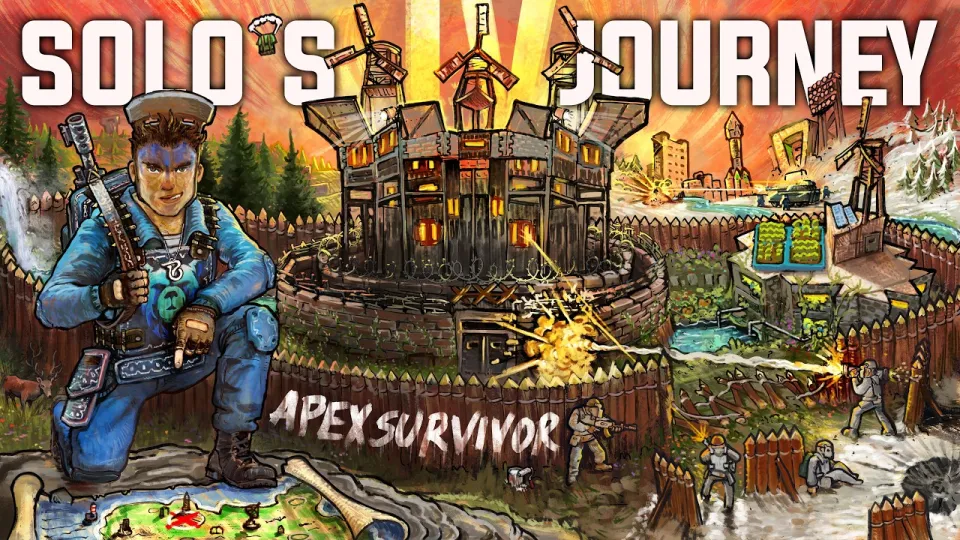
Video: Rust - A Solo's Journey IV: Apex Survivor (Movie)
You can order the same kind of articles for your own video to boost it on YouTube and Google. Just message the Telegram bot @sat_sit_bot. The bot writes and publishes the articles itself (with your YouTube video embedded) on popular topical websites (no ads). Free trial — 50 articles.
· based on the channel Blooprint
Rust solo survival is a test of patience, planning and nerve, and the clearest recent demonstration is Blooprint's "A Solo's Journey IV: Apex Survivor" — a movie covering 14 days alone on one wipe, cut into 12 chapters plus a finale. The full run is roughly four hours and fifty minutes of edited footage, and a companion site at the Solo's Journey tracker lets you type in any timestamp and see exactly what the player had built, looted or lost at that point. In short: Rust solo play is not about out-farming clans, it is about choosing fights, protecting a small footprint and converting every monument run into a permanent advantage.
What the 14-day Rust solo run actually covers
The structure of the movie is the story of a wipe, not a highlight reel; each chapter follows one stage of a solo player's escalation. The chapters run from an introduction into Chapter 1 at the 1:55 mark and continue through Chapter 12 before "The End" at 4:47:05, which means the edit compresses about two weeks of real time into a single sitting.
- Early game: spawn, primitive tools, a first small base and the race to a workbench.
- Mid game: monument runs, scrap economy, blueprints and the first real weapons.
- Late game: explosives, raid preparation and defending a base that suddenly looks worth attacking.
- Endgame: revenge arcs, alliances of convenience and a final confrontation that closes the loop opened in Chapter 1.
The scale is unusual for the niche — a five-hour video with millions of views is an outlier in a format where most creators fight for twenty minutes of attention. That length only works because each chapter has a clear goal, and the tracker exists precisely so viewers can jump in and out without losing the thread.
How solo players survive on a Rust server built for clans
Solo survival in Rust is a resource-management problem first and a combat problem second; a lone player cannot win a war of attrition against groups, so the goal is to never be forced into one. The practical rules that show up across long solo runs look like this:
- Keep the base small and cheap. A compact core with a triangle layout is harder to justify raiding than a large, obviously wealthy compound.
- Spread value. Splitting loot between a main base and small stashes means one successful offline raid does not end the wipe.
- Farm monuments with an exit plan. Oil rig and cargo ship offer the best loot per minute, but both punish players who stay too long or arrive without a boat or a fallback route.
- Trade time for information. Knowing who lives nearby, when they are online and what they drive matters more than a slightly better gun.
- Clone and replant. Genetics and farming turn a single lucky hemp or berry run into a renewable supply of meds and cloth, which is what actually keeps a solo alive through repeated fights.
A farm base with a well-defended core is the pattern that experienced solo players keep returning to, because it survives the moment when a group decides the neighbour has become annoying.
Bases, cloning and the economy behind a solo wipe
Base design is the single biggest force multiplier for a Rust solo, and the movie's build choices reflect that; the goal is a base that is annoying to raid rather than impressive to look at. A triangle core with layered doors, a small loot room and no obvious external sign of wealth buys time, and time is what a solo player converts into blueprints, explosives and a second base.
Cloning deserves its own mention because it is the quiet engine of long wipes. A player who controls a stable supply of hemp, berries and food can craft medsticks, bandages and healing items without spending scrap, which frees that scrap for blueprints and explosives. Farming is not glamorous, but in a 14-day run it is the difference between recovering from a lost fight in an hour and recovering in a day.
Oil rig, cargo ship and the risk math of monument runs
Monument runs are where a solo Rust wipe is won or lost, and oil rig plus cargo ship are the two events that define the risk curve. Both concentrate high-tier loot in a small space with predictable approach routes, which means the player who arrives first is often not the player who leaves with the loot.
- Oil rig rewards preparation: bring the right cards, enough meds and a plan for the swim or boat ride out.
- Cargo ship is a moving target, so timing matters more than gear; arriving late usually means arriving to a fight you did not choose.
- Heavy scientists and NPCs are a resource drain, not just an obstacle — every bullet spent on them is a bullet missing in the next PvP encounter.
- The best solo habit is to leave with 80 percent of the loot rather than gamble for the last 20 percent.
Raids, revenge and reading other players
Raiding as a solo is a decision about attention; every explosion announces your position, your resources and your intentions. In a long wipe the more valuable skill is choosing which neighbours deserve a raid and which deserve to be left alone, because a solo player cannot afford two active enemies at once.
That is also why diplomacy shows up in solo stories. Temporary alliances, quiet truces and shared information about aggressive groups all reduce the number of directions a lone player has to watch. When a nearby clan wipes a troublesome neighbour, the correct response is usually to stay quiet, keep farming and let the map reshuffle itself — the most deserved raid in a solo run is often one you did not have to fire a rocket for.
Common questions about long solo Rust runs
Viewers of long-format Rust movies tend to ask the same practical things, and the answers are usually about expectation management rather than secret tricks.
- Is a 14-day solo run realistic for an average player? The schedule is not, but the method is — small base, steady monument runs and no unnecessary fights work at any playtime.
- Do you need a clan to see late-game content? No, but you need patience; solo progression is slower and depends on surviving rather than dominating.
- Why is the video so long? Because the story only lands if the losses and rebuilds are shown; cutting to highlights removes the tension that makes the finale matter.
- Does the tracker spoil the movie? It is optional — use it when resuming after a break, skip it if you want the full narrative.
Useful links
- Solo's Journey tracker — enter a timestamp to see progress during the challenge.
- Blooprint Vinyl Figure on YouTooz — limited 2.5M subscriber merch.
- Blooprint mousepads and playmats at Epic Desk — limited run merch.
- Hires Studio — animated intro work.
- Veys — thumbnail art.
Final thoughts on Apex Survivor
Apex Survivor works because it treats a Rust wipe as a season of television rather than a gameplay compilation; the base, the cloning, the monument runs and the raids all feed one continuous arc. The production effort is visible in the pacing, and the companion tracker is a genuinely useful idea for a video this long. Blooprint, the channel behind the movie, has built a reputation on exactly this kind of versatility — storytelling, PvP and survival in one package. If you want to follow along or check progress mid-watch, start at solosjourneytracker.com and keep it open on a second screen.
Key takeaways
- 14 days of solo Rust on a single wipe, filmed and edited into a movie of roughly 4 hours 50 minutes.
- The movie is split into 12 chapters plus an intro and finale, from first spawn to final raid.
- A dedicated tracker at solosjourneytracker.com maps any timestamp to the creator's progress at that moment.
- Solo survival leans on monument runs like oil rig and cargo ship, cloning, and a compact triangle core base.
- The video marks 2.5 million subscribers on the Blooprint channel.
Source: Rust - A Solo's Journey IV: Apex Survivor (Movie) · Markdown version
Questions & answers
Is Rust solo survival actually viable on a populated server?
Yes, but the strategy changes completely. A solo player survives by keeping a small, cheap base, spreading loot across stashes and choosing monument runs with a clear exit plan. Fighting clans head-on is a losing plan; avoiding the fights you cannot win is the actual skill.
What is the Solo's Journey tracker for?
It is a website built for the movie that maps any timestamp in the video to the creator's progress at that moment. You type in a timecode and immediately see the state of the base, loot and objectives, which is useful if you watch the five-hour run in several sittings.
Why do solo players bother with farming and cloning?
Cloning and farming create a renewable supply of cloth, food and healing items without spending scrap. That frees scrap for blueprints and explosives, and it means a lost fight costs an hour of recovery instead of an entire wipe.
Do oil rig and cargo ship make sense for a lone player?
Both are high-risk, high-reward and worth running with preparation. Oil rig rewards cards, meds and a planned exit, while cargo ship rewards timing more than gear. The consistent rule is to leave with most of the loot rather than gamble for all of it.